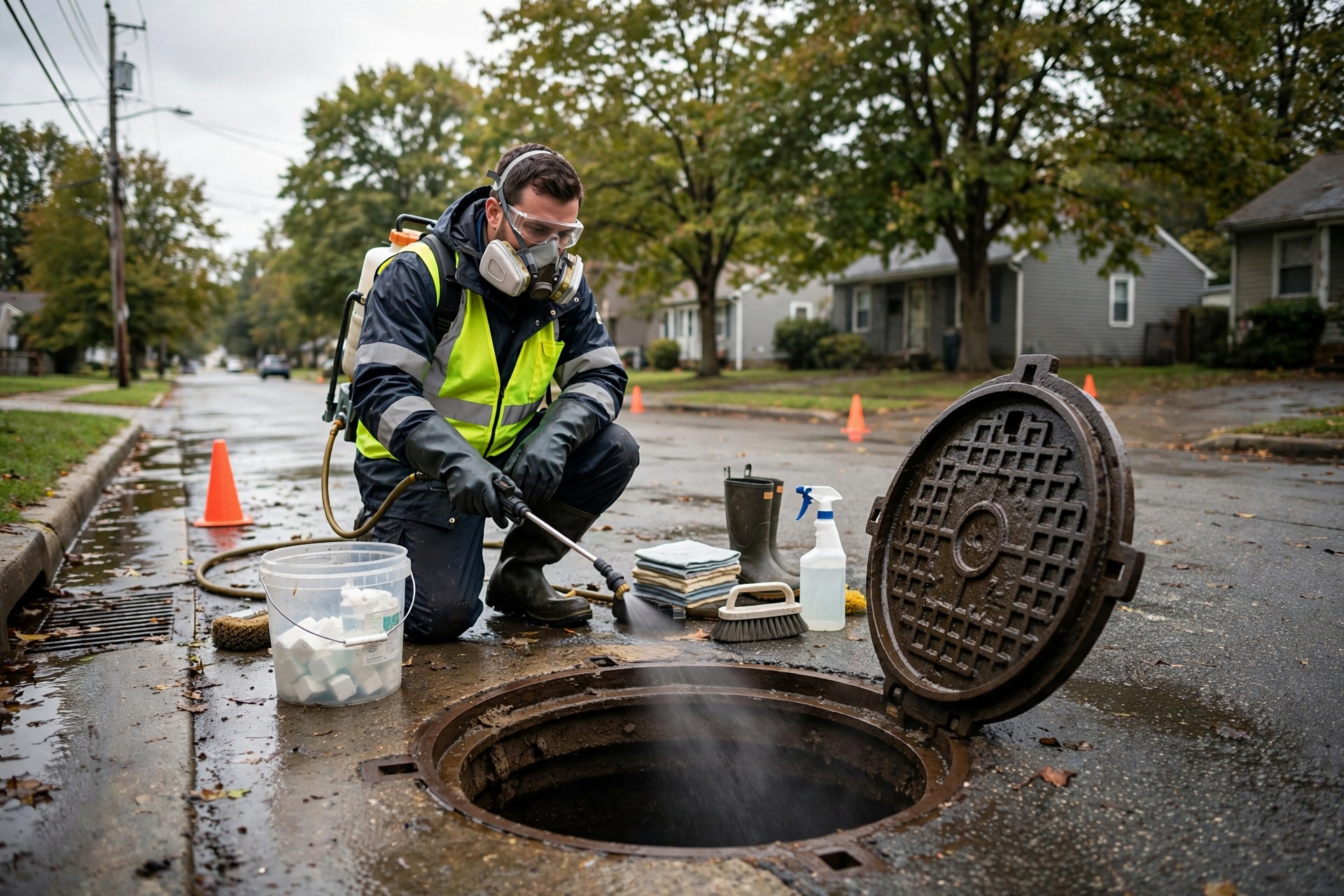
Quail Run sits in Severn off Telegraph Road with mostly 1970s-1990s single-family homes on small lots that back up to wooded drainage swales. Heavy summer downpours in Anne Arundel County's humid subtropical climate push water into aging clay sewer laterals, especially where roots from nearby trees have already cracked the lines. When a backup hits a Quail Run address, crews from 8024 Telegraph Rd can reach the neighborhood in minutes, set up containment before effluent reaches finished basements, and pull the material without tearing up driveways.
Winters stay mild but still bring enough rain to saturate the clay-heavy soil under Quail Run streets, so even small clogs turn into overflows fast. The company keeps extraction trucks and air movers staged at the Telegraph Road yard so technicians can isolate the affected section, camera the line to the county main, and restore the property the same day. Homeowners along Quail Run Drive and the side streets that feed into it get direct access without crossing major highways.
Odenton borders the south edge of Quail Run, so some properties sit on shared laterals that run toward the same county trunk. That layout means a single backup can affect two or three houses at once; the team coordinates with Anne Arundel County utilities on the spot and keeps neighbors updated while the work stays inside the Quail Run footprint.
Around Quail Run
We regularly work near:
- 📍Quail Run Drive
- 📍Telegraph Road
- 📍Severn Run stream corridor
- 📍Quail Run neighborhood entrance off MD 174
Sewage Cleanup in Quail Run — Local Notes
- •Quail Run lots slope toward rear drainage ditches, so sewage often pools against foundation walls before it reaches the street; pumps must be staged in backyards rather than driveways.
- •Many homes here still have original cast-iron stacks that corrode at the cleanout, creating recurring backups after every prolonged summer rain.
- •Narrow cul-de-sacs limit truck positioning, so smaller portable extractors are used first to keep the main roads clear for residents.
- •Mild winters keep the ground workable year-round, but the same mild temperatures let roots grow deeper into laterals, requiring more frequent camera inspections after each storm.