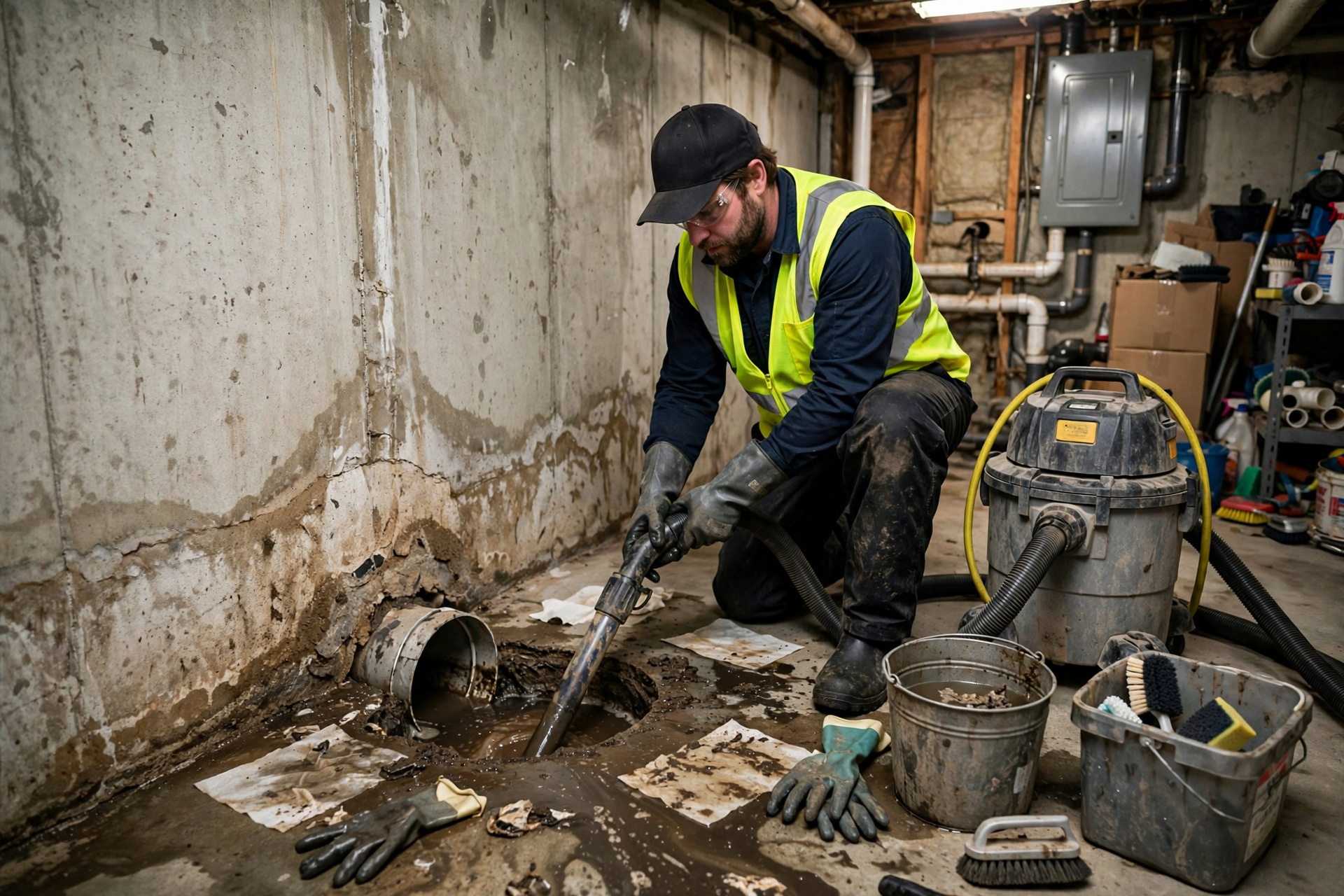
Sewer backups in Severn often stem from aging clay pipes common in 1970s and 1980s homes near Telegraph Road and Route 174. Heavy summer rains combined with the area's high water table push groundwater into cracked lines, sending contaminated water into basements and crawl spaces. Crews must first isolate the source, then extract standing effluent before it migrates under finished floors or into HVAC returns that serve Odenton and Glen Burnie neighborhoods.
After removal, porous materials such as particleboard cabinets, carpet padding and drywall below the flood line are removed to prevent hidden mold growth during the humid subtropical summers. Technicians apply hospital-grade disinfectants to concrete slabs and joists, then use commercial air movers and dehumidifiers sized for the square footage. Anne Arundel County health codes require documentation of moisture readings below 15 percent before any reconstruction begins.
Edge cases include backups that reach upper levels through shared stacks in multi-family units along Severn Road or when tree roots from nearby wooded lots penetrate laterals after mild winters. In these situations, crews coordinate with plumbers for camera inspections while containing the affected zone to avoid cross-contamination into adjacent living areas.
Homeowners should avoid using household fans or bleach alone, as both can drive spores deeper into wall cavities or create toxic fumes in confined spaces. Professional equipment and disposal methods protect both the property and the surrounding watershed that drains toward the Severn River.
Technician insight
In Severn the thing that catches most people out with sewer backup cleanup is the high water table combined with clay soils around older homes near Odenton. After a summer storm, water can re-enter the same line within hours if the lateral is not addressed, and the humidity keeps wall cavities damp long after the floor looks dry.
Telegraph Road Basement Backup
Heavy rain sent sewage into a 1980s Severn split-level basement through a cracked clay lateral. Extraction removed two inches of effluent, affected drywall and carpet were cut out, and drying equipment ran for four days until readings dropped below 12 percent. The homeowner avoided mold growth that commonly appears in Anne Arundel summers when moisture is left unchecked.
Sewer Backup Cleanup Services We Offer
✓Basement Sewage Extraction
Removes standing wastewater from Severn basements using truck-mounted pumps rated for solids, preventing further absorption into concrete and subfloors.
✓Contaminated Drywall Removal
Cuts and disposes of affected drywall up to 12 inches above the water line to eliminate hidden bacterial growth common after backups in older Anne Arundel homes.
✓Odor Neutralization Treatment
Applies enzyme-based and hydroxyl treatments to neutralize hydrogen sulfide odors that linger in humid Severn summers long after visible water is gone.
✓Crawl Space Sewage Cleanup
Extracts effluent and installs vapor barriers in Severn crawl spaces where high water tables and mild winters keep soil saturated year-round.
✓Carpet and Pad Disposal
Removes and hauls saturated carpet and padding that cannot be salvaged after sewage contact, following Anne Arundel County disposal guidelines.
Sewer Backup Cleanup Cost in Severn, MD
| Service | Typical Range | What Affects It |
|---|---|---|
| Initial Assessment And Containment | $150–$350 | Varies by property access and time of day |
| Sewage Extraction Per 100 Sq Ft | $400–$800 | Includes pump-out and basic disinfection |
| Drywall And Insulation Removal | $300–$700 | Based on linear feet and disposal fees |
| Full Drying And Odor Control | $500–$1,200 | Equipment runtime and enzyme treatments |
Pricing confirmed on-site before work begins. Call 24/7 for immediate dispatch.
How it works
- 1
Emergency Assessment
Technician arrives within hours, locates the backup source, and maps affected zones in the Severn property while wearing full PPE.
- 2
Water Extraction
Truck-mounted equipment removes standing sewage and contaminated water from floors and lower walls before it spreads.
- 3
Sanitization And Drying
Disinfectants are applied, followed by industrial drying equipment to bring moisture levels below county health standards.
- 4
Final Clearance
Moisture meters and visual inspection confirm the space is dry and safe for reconstruction or occupancy.
Pricing
Upfront written quotes after on-site inspection; final cost depends on volume, affected square footage, and materials removed.