2026-10-19 ·
Complete Guide to Structural drying and dehumidification in Severn, Maryland
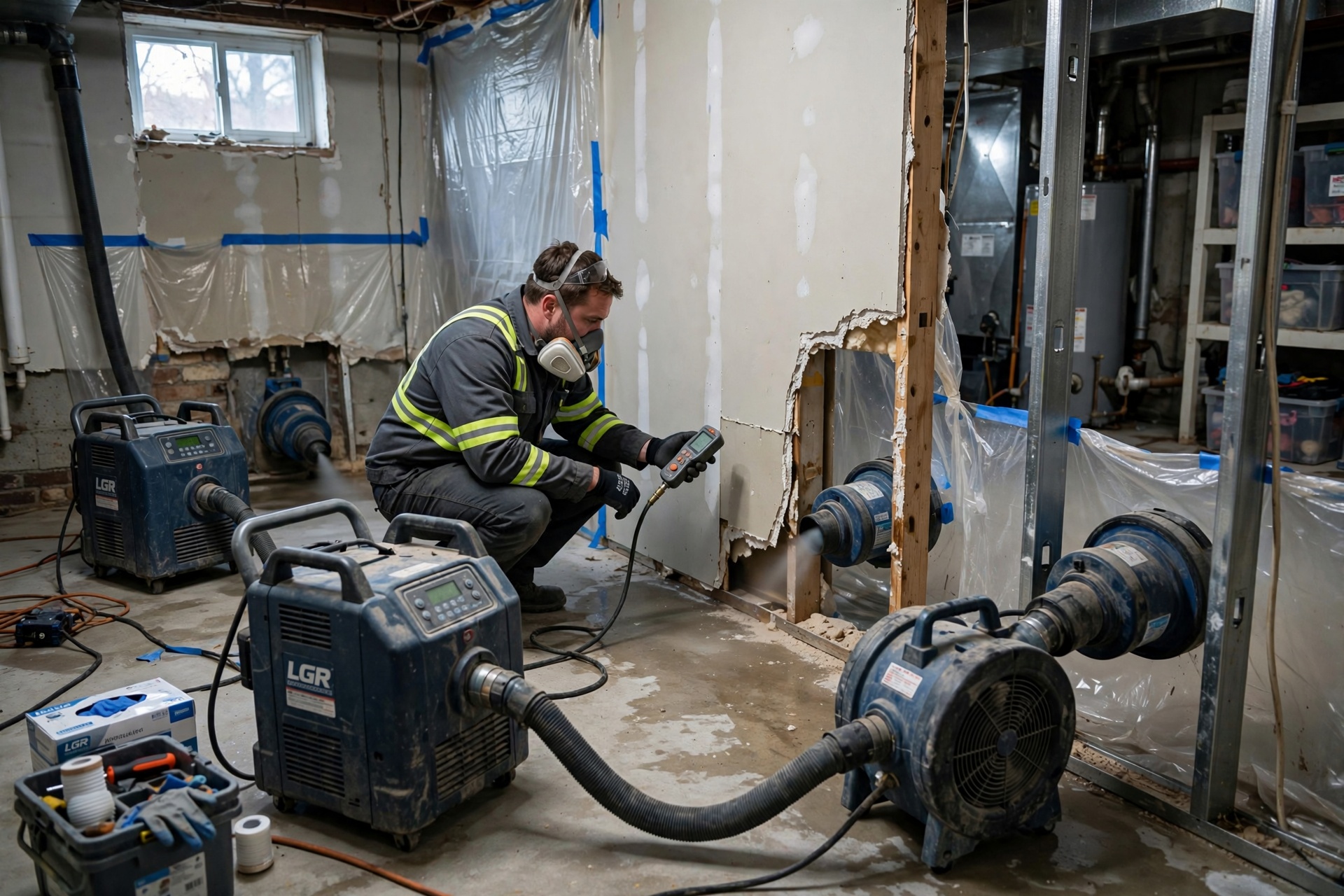
Structural drying and dehumidification in Severn homes after sewage incidents typically takes 3 to 7 days when crews use industrial air movers and dehumidifiers rated for 70-pint daily extraction. The process begins with extraction of standing water, followed by moisture mapping with meters to locate hidden saturation in subfloors and wall cavities common in 1970s-1990s tract housing throughout Severn and Odenton.
Preparing the Structure for Drying
After sewage extraction crews finish removal, technicians isolate affected zones with plastic barriers to prevent cross-contamination into unaffected rooms. In Anne Arundel County properties, this step matters because many basements sit partially below grade and draw moisture from surrounding clay soils. Crews remove baseboards and drill small weep holes at the bottom of drywall to allow airflow behind the material. They also lift carpet edges where possible or cut out saturated padding that holds water against the slab. These actions create direct paths for air movement that reduce overall drying time by 30 to 40 percent compared with sealed rooms.
Choosing Equipment for Local Climate Conditions
Severn's humid subtropical summers with high dew points require low-grain refrigerant dehumidifiers that pull moisture even when ambient humidity exceeds 60 percent. Technicians place 20- to 30-amp air movers at 45-degree angles along walls to create a vortex effect that lifts moisture from concrete slabs common in Meade Village and Provinces neighborhoods. In milder winter months, desiccant dehumidifiers supplement the setup because outside air can carry enough moisture to slow evaporation. Daily moisture readings guide adjustments; when drywall drops below 15 percent moisture content and subfloor readings reach 12 percent or less, equipment is removed.
Addressing Hidden Moisture in Older Homes
Many Severn residences built before 1990 contain plaster walls and oak flooring that absorb and release water slowly. Technicians use infrared cameras to detect temperature differences indicating trapped moisture along pipe chases and around toilet flanges. In Glen Burnie-adjacent sections of the county, older crawl spaces often lack vapor barriers, allowing ground moisture to migrate upward after a sewage event. Crews install temporary floor-level dehumidifiers in these spaces and seal vents to maintain negative pressure. This targeted approach prevents mold growth that can appear within 48 hours when relative humidity stays above 60 percent.
Monitoring Progress and Final Verification
Daily logs track temperature, relative humidity, and moisture content at multiple depths in affected materials. Technicians document readings at the same locations each visit to show steady decline. Once targets are met, they remove equipment and apply antimicrobial coatings only where porous materials were directly contacted by black water. Homeowners in Stillmeadows and Quail Run often request follow-up checks two weeks later because residual humidity from nearby Annapolis weather patterns can reintroduce moisture. Proper documentation of these steps supports insurance claims for structural drying work.
For full details on handling the initial sewage event before drying begins, review the sewage backup cleanup process. Homeowners dealing with sudden incidents can also consult the Complete Guide to Emergency sewage cleanup in Severn, Maryland for immediate response steps. Additional guidance on related water events appears in the Complete Guide to Basement sewage cleanup in Severn, Maryland.